
"coffee climate requirements"
4000 article(s) found
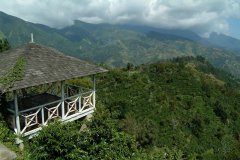
What is the grade of Jamaica Blue Mountain Coffee beans? Introduction to the grade standard of Jamaican blue mountain coffee beans.
Jamaica's blue mountain coffee beans are known to everyone in the coffee industry, and it has a long history. Even for those who don't drink coffee, when it comes to coffee, when it comes to blue mountain coffee, let's introduce the grade of Jamaican blue mountain coffee beans and what a standard it is. Jamaica (Jamaica) is one of the islands in the Caribbean. The Negro and Muratto

What's the difference between coffee beans and coffee? how to make good siphon coffee?
Arabica coffee and Robbite coffee are harvested once every three or four years, and their lifespan is also different due to different production conditions and different degrees of care. Both varieties need plenty of sunlight and moisture. Arabian coffee trees prefer a seasonal climate of 15 degrees Celsius and 24 degrees Celsius, while Robbins prefer a warm equatorial climate, where temperatures are stable in the range of 24 degrees Celsius to 29 degrees Celsius.

The most classic iron pickup fine coffee beans cultivation geographical location climate altitude profile
Coffee fruits take longer to develop. Coffee arabica fruit ripens in 810 months, usually in December of the year. Rainfall has a great influence on fruit development, and climate conditions directly affect fruit development of Arabica coffee berries. Typica and Bourbon are the two classic high-quality coffee varieties. In 1991, they were re-cultivated.

A brief introduction to the cultivation of Arabica boutique coffee beans, geographical location, climate and altitude
Good Arabica? Coffee requires complicated manual picking, selection and meticulous processing, so are the most expensive and best coffee beans in the world? Arabica? Grow coffee. Robusta? Growing coffee is usually used to produce instant coffee and canned coffee because of its low cost. A few of the better ones? Robusta? Growing coffee is also used in blending (with Allah)

Do you understand so many varieties and places of origin as a required course for veteran coffee drivers?
Latte, macchiato, cappuccino, these espresso are almost everyone's initial understanding of coffee. We don't comment on the pros and cons of Starbucks espresso, but it does enlighten many people's love of coffee. I also used my pocket money to save stars a long time ago, and later, I gradually found that coffee without milk and milk is true love. About coffee.

After-taste Lazimus Manor, Colombia, the cultivation of boutique coffee beans, geographical location and climate.
Compared with other producing countries, Colombia is more concerned with developing products and promoting production. It is this, coupled with its superior geographical and climatic conditions, that makes Colombian coffee excellent in quality and delicious and famous all over the world. The status of coffee in Colombia is evident in the following example: all vehicles entering the country must be sprayed and sterilized so as not to inadvertently cause disease and damage coffee trees.

Planting requirements and conditions of Coffee trees
The origin of the coffee tree is Ethiopia in Africa. In botany, coffee trees belong to the evergreen trees of the subgenus Rubiaceae, and coffee beans, commonly known as coffee beans, are actually the seeds of the fruit of coffee trees. They are called coffee beans only because they are shaped like beans. Climate is the decisive factor for coffee cultivation. Coffee trees are only suitable for growing in the tropics or subtropics, so latitude 25 degrees south and north.
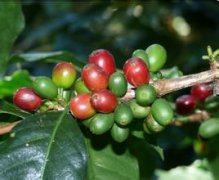
Coffee cultivation requirements for the environment
Coffee cannot be grown in any environment, because it is originally a tropical rainforest plant, and in the development of the system, it develops habits that require calm wind, warm, shade or semi-shade and humid environments. Therefore, coffee has strict requirements for planting conditions. We call the strip of area on both sides of the equator, between 25 degrees north and south latitude, suitable for coffee growth, coffee belt.

Fine Coffee the planting requirements and conditions of Coffee trees
The origin of the coffee tree is Ethiopia in Africa. In botany, coffee trees belong to the evergreen trees of the subgenus Rubiaceae, and coffee beans, commonly known as coffee beans, are actually the seeds of the fruit of coffee trees. They are called coffee beans only because they are shaped like beans. Climate is the decisive factor for coffee cultivation. Coffee trees are only suitable for growing in the tropics or subtropics, so latitude 25 degrees south and north.

Basic knowledge of Coffee planting requirements and conditions of Coffee trees
The origin of the coffee tree is Ethiopia in Africa. In botany, coffee trees belong to the evergreen trees of the subgenus Rubiaceae, and coffee beans, commonly known as coffee beans, are actually the seeds of the fruit of coffee trees. They are called coffee beans only because they are shaped like beans. Climate is the decisive factor for coffee cultivation. Coffee trees are only suitable for growing in the tropics or subtropics, so latitude 25 degrees south and north.

What is the difference between Arabica coffee beans and other coffee beans
Following caf é (Wechat official account vdailycom) found that Arabica Coffee beans grow at colder high elevations in the tropics, while high temperatures and low elevations, which are not suitable for Arabica varieties, are home to Robusta. Robusta grows in lowlands 200-600 meters above sea level. He likes a warm climate and requires a temperature of

What are the requirements of the planting environment for the growth of coffee trees? How long does it take to bear fruit?
Professional coffee knowledge exchange more coffee bean information please pay attention to the coffee workshop (Wechat official account cafe_style) what are the requirements for the growing environment of coffee trees? How long does it take to bear fruit? Although the coffee tree is called a tree, it is actually an evergreen shrub. If it is not trimmed, it can be as high as 3-9 meters. There is a glossy dark green at the top of the leaf and nothing at the bottom of the leaf
Requirements of Ecological Environment for planting Coffee trees
Small seed coffee is native to the lower part of the Ethiopian rainforest in northern Africa. The temperature is relatively low, with an average annual temperature of 20 degrees. The origin of medium-grain coffee is near the equator. Therefore, small seed coffee has stronger cold tolerance and wider adaptability than medium grain coffee. Medium-grain coffee requires a slightly higher temperature.

The basic altitude of coffee planting technology is the most suitable for planting.
Coffee planting technology the origin of coffee trees is in Ethiopia, Africa. In botany, coffee trees belong to the evergreen trees of the subgenus Rubiaceae, and coffee beans, commonly known as coffee beans, are the seeds of the fruit of coffee trees, just because they are shaped like beans, so they are called coffee beans. Climate is the decisive factor for coffee cultivation. Coffee trees are only suitable for growing in the tropics or subtropics.
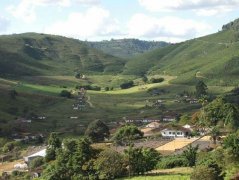
How to grow Coffee quality will be better Coffee planting Micro-environment introduction
How to grow coffee quality will be better coffee planting microenvironment introduces the origin of coffee trees in Ethiopia, Africa. In botany, coffee trees belong to the evergreen trees of the subgenus Rubiaceae, and coffee beans, commonly known as coffee beans, are the seeds of the fruit of coffee trees, just because they are shaped like beans, so they are called coffee beans. Climate is the decision of coffee cultivation.

Requirements of Coffee on Ecological Environment Environmental requirements for planting Coffee trees
Small seed coffee is native to the lower part of the Ethiopian rainforest in northern Africa. The temperature is relatively low, with an average annual temperature of 20 degrees. The origin of medium-grain coffee is near the equator. Therefore, small seed coffee has stronger cold tolerance and wider adaptability than medium grain coffee. Medium-grain coffee requires a slightly higher temperature. First, the requirement for temperature should be based on the natural conditions of Yunnan, and the suitable planting area of coffee should be selected.

Robusta coffee is not good? what are the characteristics of robusta coffee?
Professional coffee knowledge exchange more coffee bean information please pay attention to the coffee workshop (Wechat official account cafe_style) Robstado grows in the lowland 200600 meters above sea level, likes the warm climate, requires a temperature of 2429 ℃, and does not require high rainfall, but there is a point that this variety depends on insects or wind to pollinate, so it takes 911 months from pollination to fruit.

Coffee beans grow in specific locations, coffee beans grow in interlocking conditions.
Professional coffee knowledge exchange More coffee bean information Please pay attention to coffee workshop (Weixin Official Accounts cafe_style) Qianjie-coffee planting introduction Coffee tree origin in Ethiopia, Africa Coffee tree in botany, belongs to the Rubiaceae coffee subgenus evergreen trees, and commonly known as coffee beans, in fact, coffee tree fruit seeds, only because the shape like beans,
Coffee tree cultivation requirements for the ecological environment
Arabica coffee is native to the Ethiopian tropical rain forest in northern Africa. The temperature is relatively low, with an average annual temperature of 20 degrees. The origin of medium-sized coffee is near the equator. Therefore, Arabica coffee is more cold-resistant than medium coffee and has a wider adaptability. Medium coffee requires a slightly warmer environment.
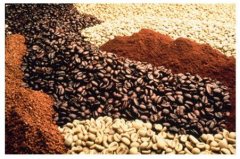
Special "requirements" for the growth environment of small-grain coffee
Small seed coffee is native to the lower part of the Ethiopian rainforest in northern Africa. The temperature is relatively low, with an average annual temperature of 20 degrees. The origin of medium-grain coffee is near the equator. Therefore, small seed coffee has stronger cold tolerance and wider adaptability than medium grain coffee. Medium-grain coffee requires a slightly higher temperature.